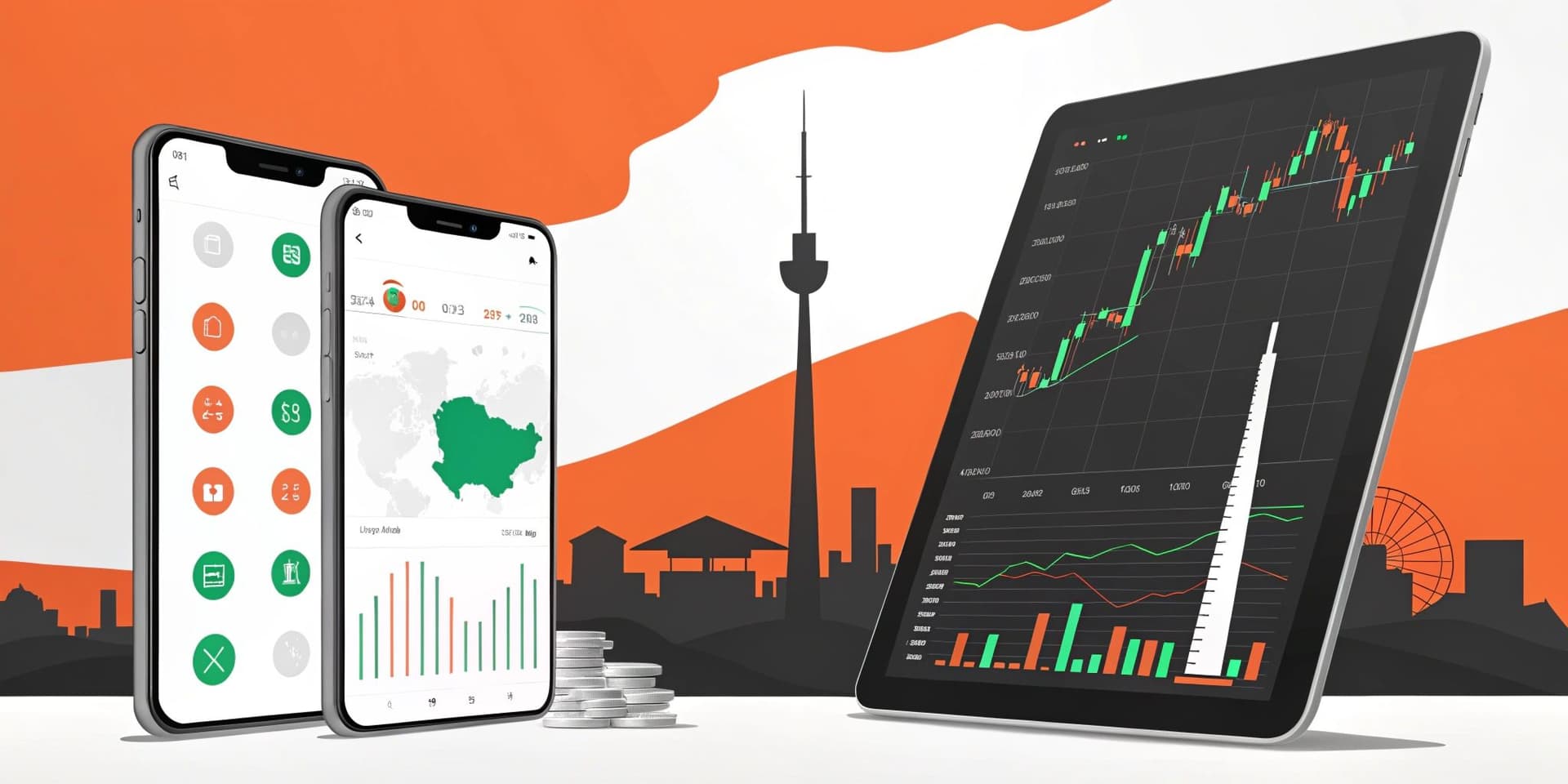
Picking a crypto app in Nigeria today is less about chasing buzzwords and more about understanding how people really move money. In 2025, Nigerian users are not experimenting with crypto — they are actively using it as a financial tool. That reality has reshaped what matters most when choosing a trading app: reliability, speed, and the ability to move between digital assets and local currency without friction.
Rather than listing features copied from exchange websites, this guide looks at how different platforms function in real conditions and why Nigerian traders gravitate toward certain tools over others.
Why Crypto Apps Took Off in Nigeria
Nigeria’s crypto activity didn’t grow because of marketing campaigns or global trends. It grew out of necessity. Mobile phones became the primary financial interface for millions of people long before crypto apps appeared reminded of that fact.
Today, trading from a phone is the default, not the exception. Nigerians use apps to monitor prices, move funds, and switch between assets in minutes. Traditional banking limitations pushed users toward alternatives, and crypto platforms quietly filled the gap.
Peer-to-peer trading, mobile wallets, and lightweight apps became the backbone of everyday crypto use, especially when direct banking routes were restricted.
What Actually Matters When Choosing a Crypto App
Most apps claim to be secure, fast, and easy. In practice, Nigerian users judge platforms differently. Real-world usage tends to focus on:
- how quickly funds can be converted and moved,
- whether the app works consistently during high activity,
- how simple it is to understand without tutorials,
- and whether problems get resolved without endless support tickets.
The best platforms are not always the most advanced — they are the ones that remove friction from routine actions.
Platforms Nigerians Use in 2025
Instead of ranking apps by popularity alone, it makes more sense to look at why people choose them.
Binance: A Toolkit, Not Just an Exchange
For many Nigerians, Binance feels less like a single app and more like a collection of tools. Users move between spot trading, peer-to-peer deals, staking, and automated strategies without leaving the interface.
Its appeal lies in flexibility. Those who want manual control can negotiate directly in the P2P section, while experienced traders can lean on charts, bots, and deeper liquidity pools. This dual personality explains why Binance remains a daily driver for a wide range of users.
Quidax: Built With Local Habits in Mind
Quidax did not try to replicate global exchanges feature for feature. Instead, it focused on how Nigerians actually interact with money.
The app prioritises clarity over complexity. Buying and selling feels transactional rather than speculative, which suits users who consider crypto a financial utility rather than a trading game. This local-first design is what keeps Quidax relevant.
Luno: A Gentle Entry Point
Luno’s strength is restraint. It avoids overwhelming users with tools they don’t yet understand. For people new to crypto, this matters more than access to every possible feature.
The app guides users through simple actions — buying, holding, sending — and only introduces complexity when needed. That approach makes Luno a common starting point rather than a destination for advanced strategies.
Busha: One App, Fewer Decisions
Busha appeals to users who want to avoid thinking about where to trade or how to swap assets. Everything is presented as a single flow: move in, exchange, move out.
This simplicity attracts users who value predictability over optimisation. It’s less about timing the market and more about executing straightforward transactions without confusion.
KuCoin: For Traders Who Want Control
KuCoin attracts a different crowd. Its users are typically comfortable with volatility, complex interfaces, and experimentation.
Trading bots, less common assets, and multiple order types make sense to experienced users who want room to test strategies. For beginners, it can feel excessive — for others, it feels necessary.
OKX: Performance Over Simplicity
OKX is chosen by users who care about execution quality. Fast order matching, professional-grade tools, and a global focus define the experience.
It’s not built for casual use. Instead, it caters to people who already know what they want and expect the platform to keep up.
Yellow Card: Straightforward Buying and Selling
Yellow Card positions itself away from trading complexity. The focus is on access — getting in and out efficiently.
That makes it appealing to users who treat crypto less as an investment vehicle and more as a means of transferring value.
Remitano: Structured Peer-to-Peer Trading
Some users prefer dealing directly with other people rather than platforms. Remitano formalises that preference by adding structure and safeguards around peer trades.
It doesn’t aim to be fast in every scenario, but it prioritises clarity and dispute handling — which matters when trust is the main currency.
Breet: Exit First, Trade Later
Breet is often used not to trade, but to exit. Users who want to convert crypto to local funds quickly choose it because there’s no order book, no pricing strategy, and no negotiation.
It does one thing and does it efficiently.
What Nigerian Traders Say They Remember
Across community discussions and forums, a few themes come up repeatedly:
- delayed withdrawals leave a lasting negative impression,
- unclear pricing erodes trust quickly,
- mobile usability matters more than desktop features,
- and apps that respect local realities outperform those that don’t.
Consistency, not innovation, tends to define long-term usage.
Final Thoughts
There is no universal “best” crypto app — only tools that fit specific habits.
Some Nigerians want control and advanced options. Others want speed and clarity. Many switch between multiple apps depending on the task. What matters is understanding how you intend to use crypto, not which platform claims the top spot.
In 2025, successful crypto apps in Nigeria are not the ones with the longest feature lists, but the ones that quietly fit into everyday financial routines.